

There are few subjects more naturally suited to photography than a Lamborghini at speed.
During my weekend photographing the 2026 TireRack.com Battle on the Bricks at Indianapolis Motor Speedway, I had the opportunity to photograph several different racing series. But one of the most visually spectacular was Lamborghini Super Trofeo North America—a field filled with Lamborghini Huracán Super Trofeo Evo2 race cars attacking the Indianapolis road course.
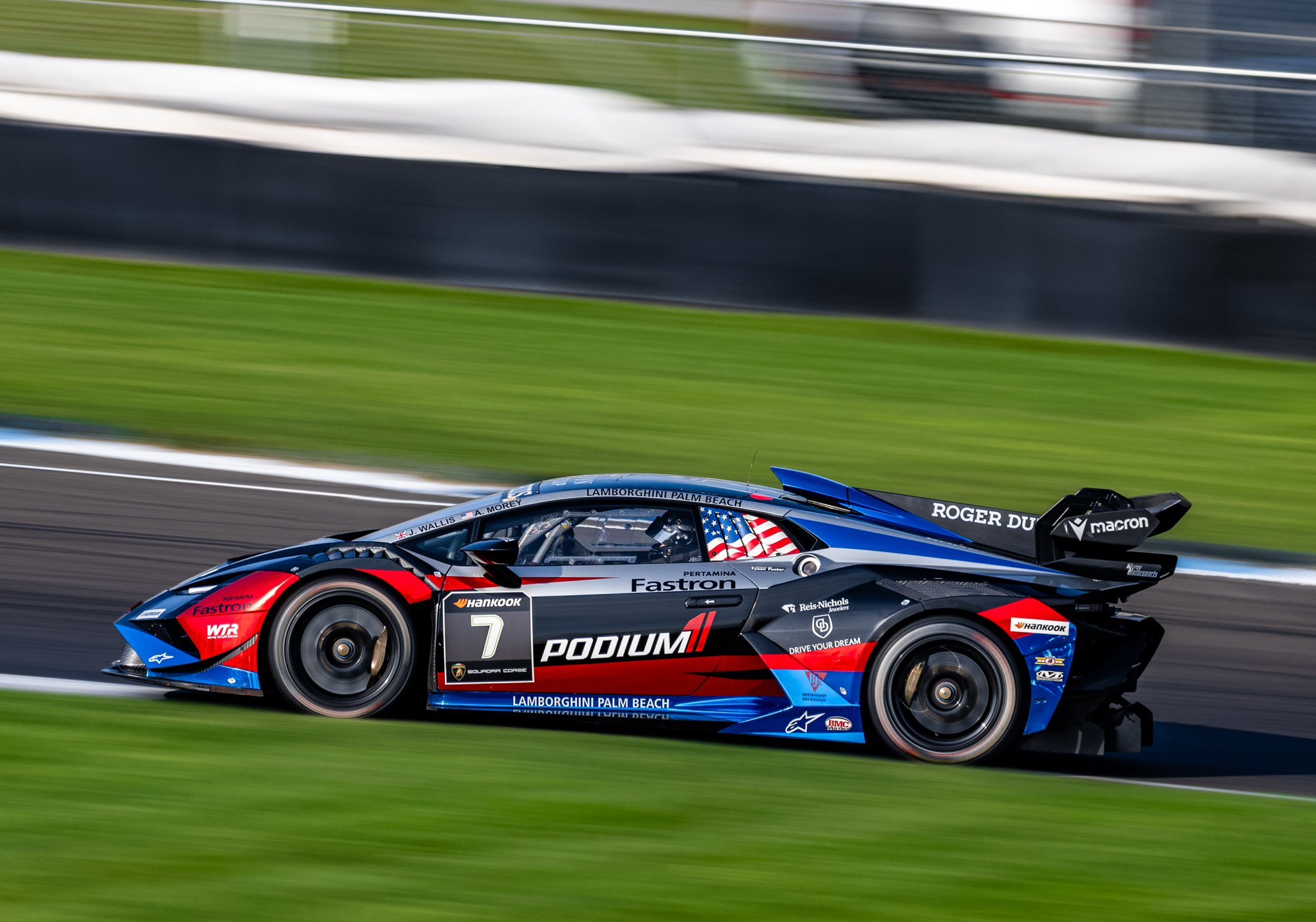

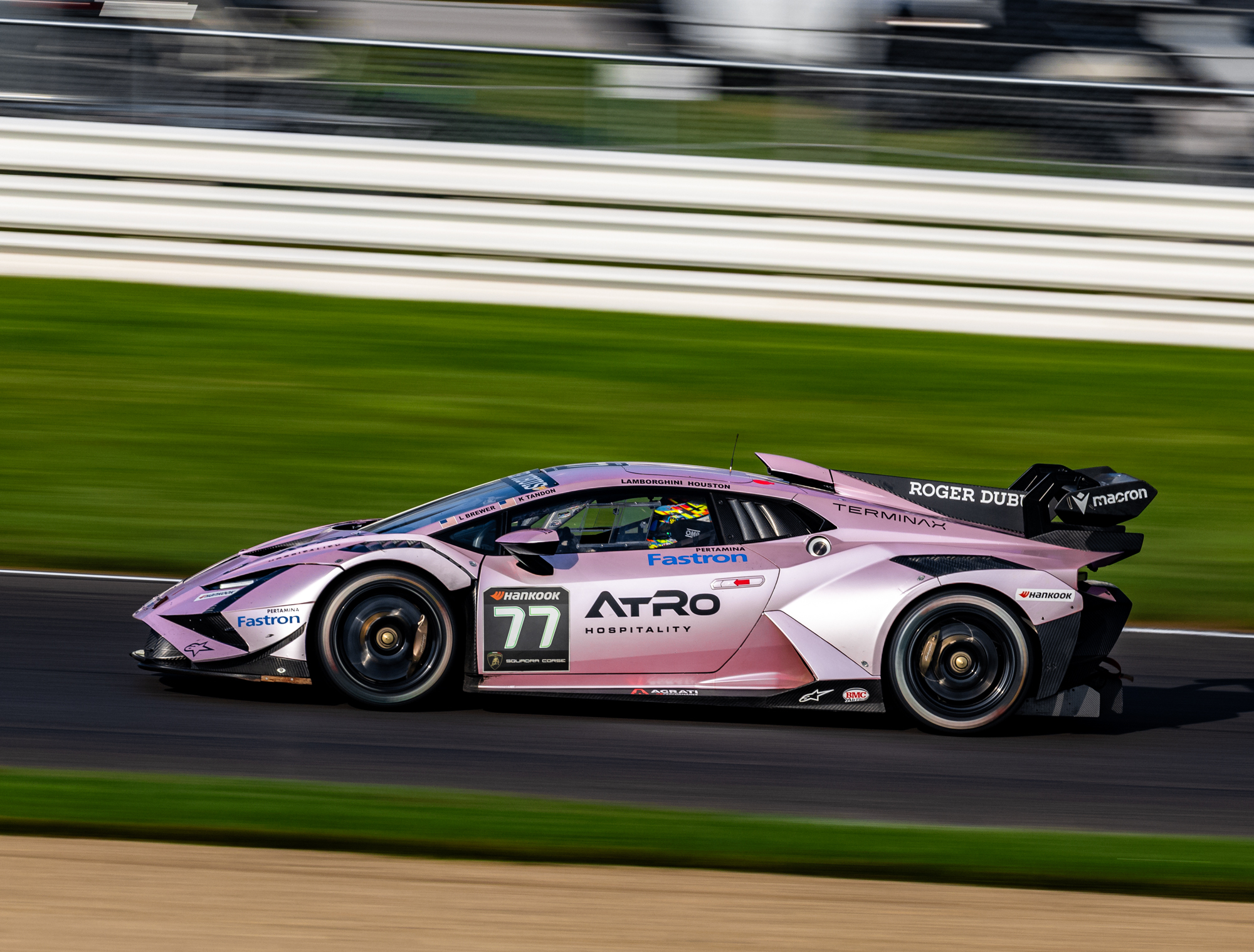
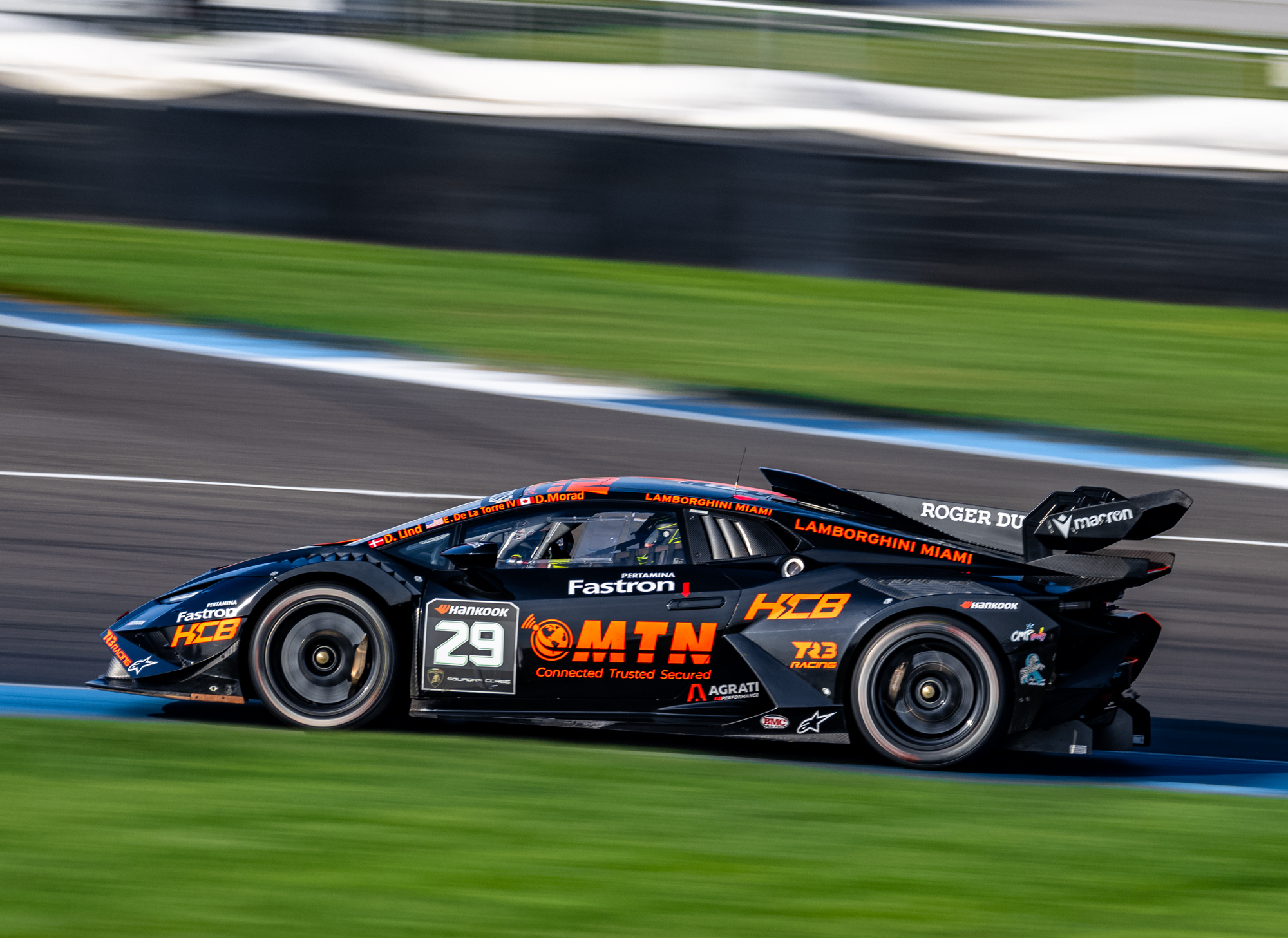
Between the unmistakable shape of the Huracán, the liveries, the sound of naturally aspirated V10 engines and the backdrop of Indianapolis Motor Speedway, it was difficult to ask for a better photographic subject.
And as it turned out, I was photographing a little bit of Lamborghini racing history.
What Is Lamborghini Super Trofeo?
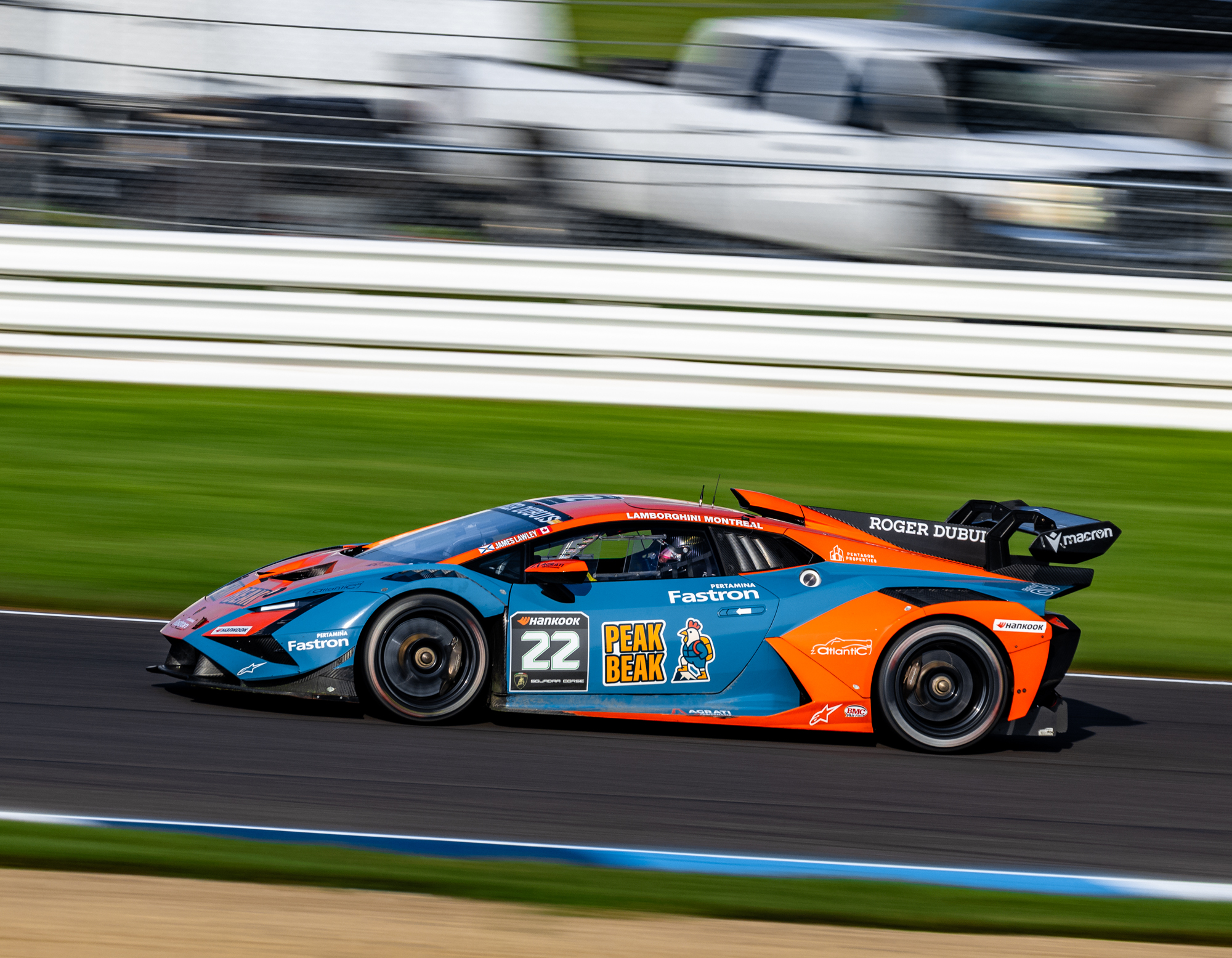
Lamborghini Super Trofeo is Lamborghini’s one-make racing championship. The series began in Europe in 2009, expanded to Asia in 2012 and arrived in North America in 2013.
Unlike a traditional sports-car race featuring cars from multiple manufacturers, Super Trofeo puts Lamborghini against Lamborghini. That makes the racing particularly interesting because the machinery is fundamentally the same and places even greater emphasis on the drivers and teams.
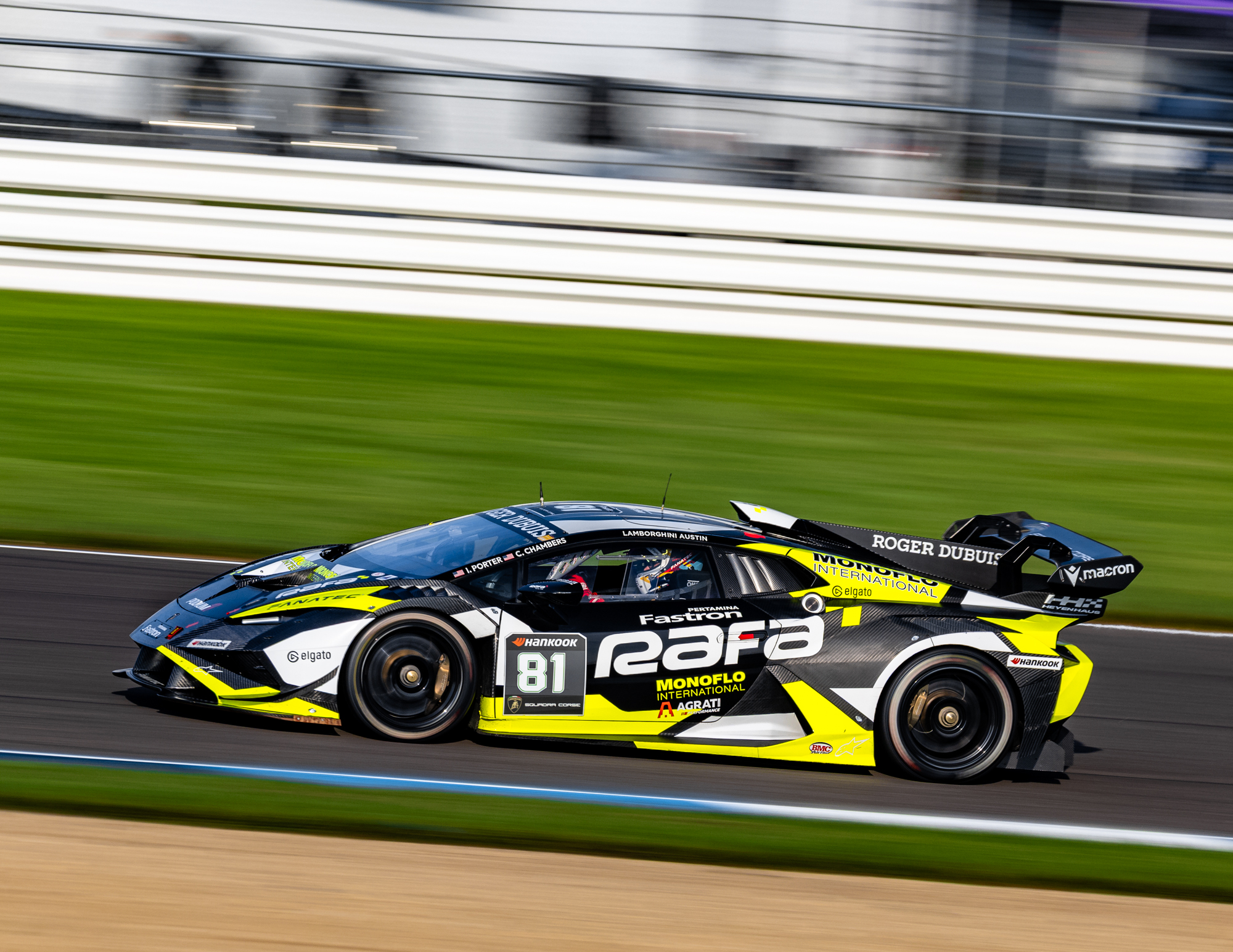
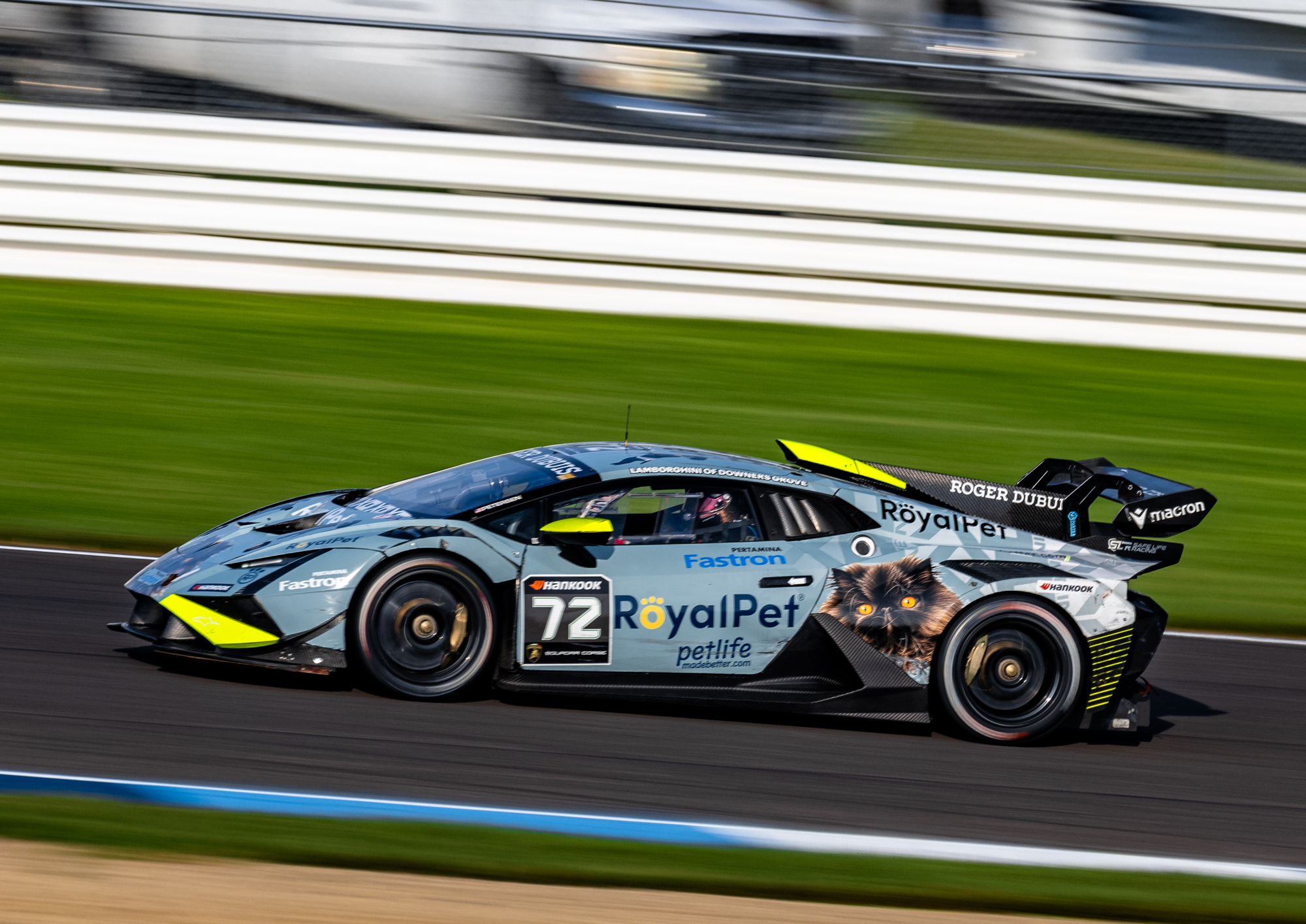
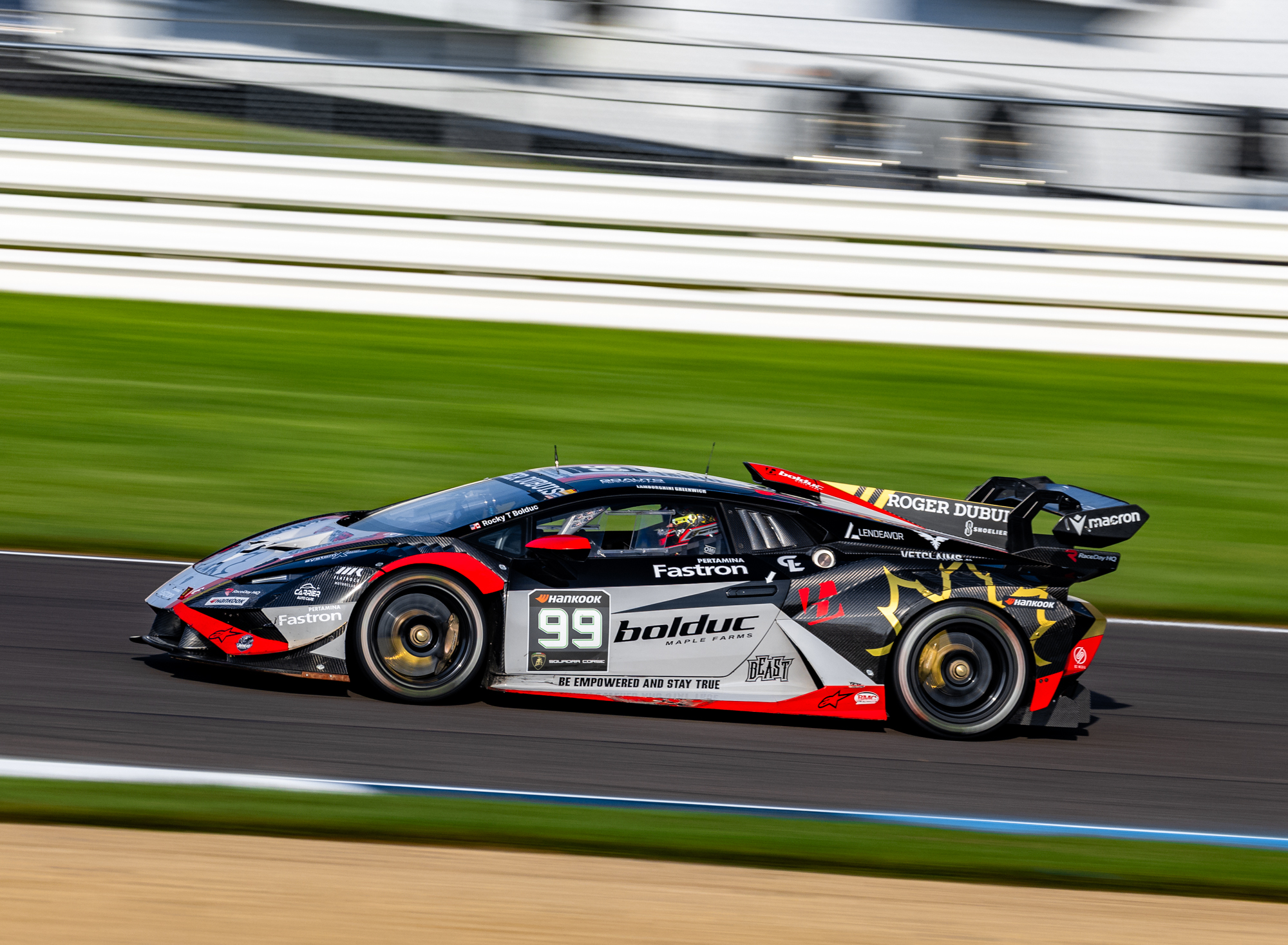
The North American championship is divided into four categories—Pro, ProAm, Am and LB Cup—allowing drivers with different experience levels to compete within the same race.
The North American series has also become a regular part of major IMSA weekends, visiting some of America’s great road-racing circuits. Indianapolis was the fifth stop on the six-round 2026 championship, following Sebring, Laguna Seca, Watkins Glen and Road America.
But the Indianapolis weekend had additional significance.
The Last Roar of the Huracán at Indy
The 2026 Battle on the Bricks weekend was expected to mark the final North American race appearance of the Lamborghini Huracán Super Trofeo Evo2.
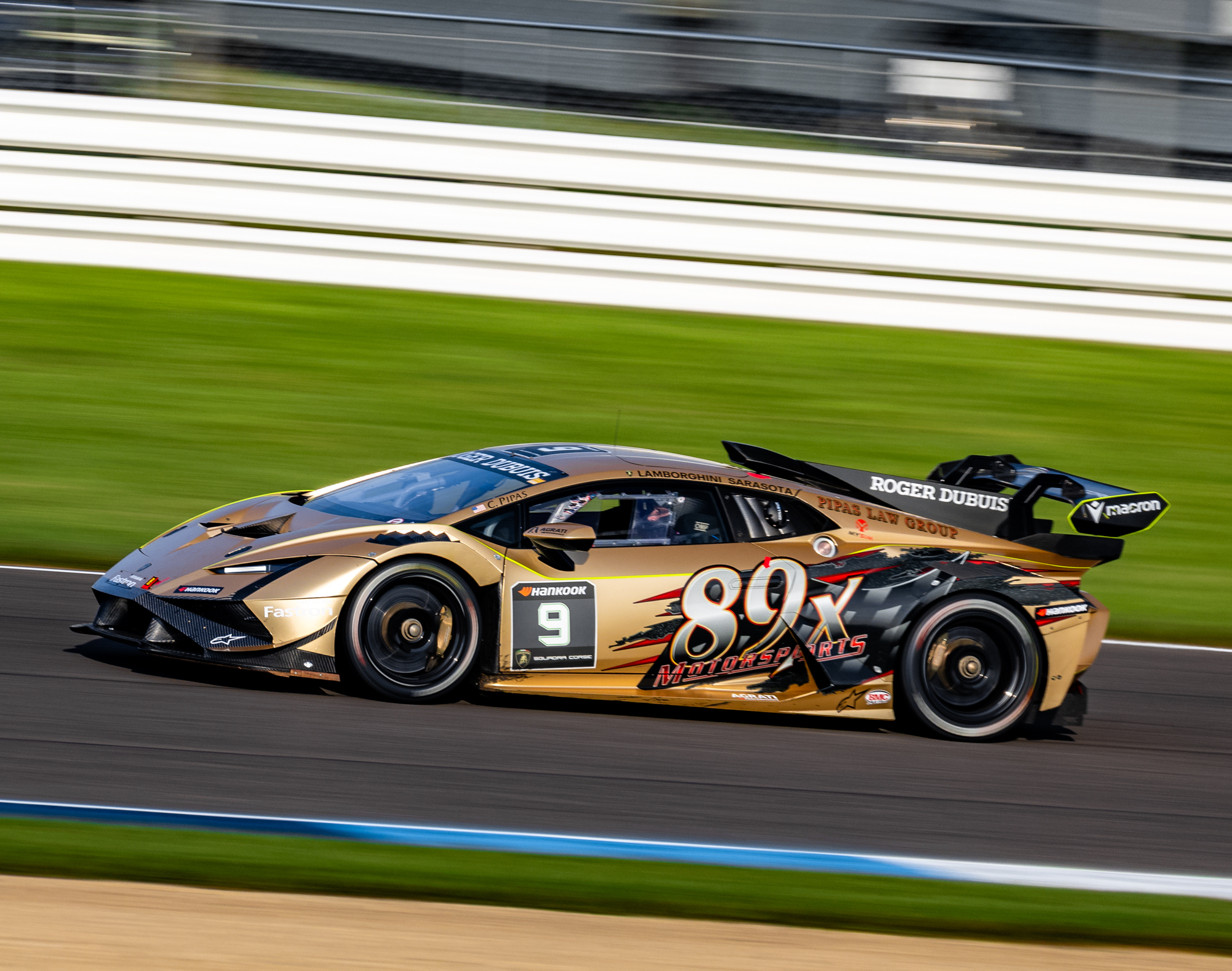
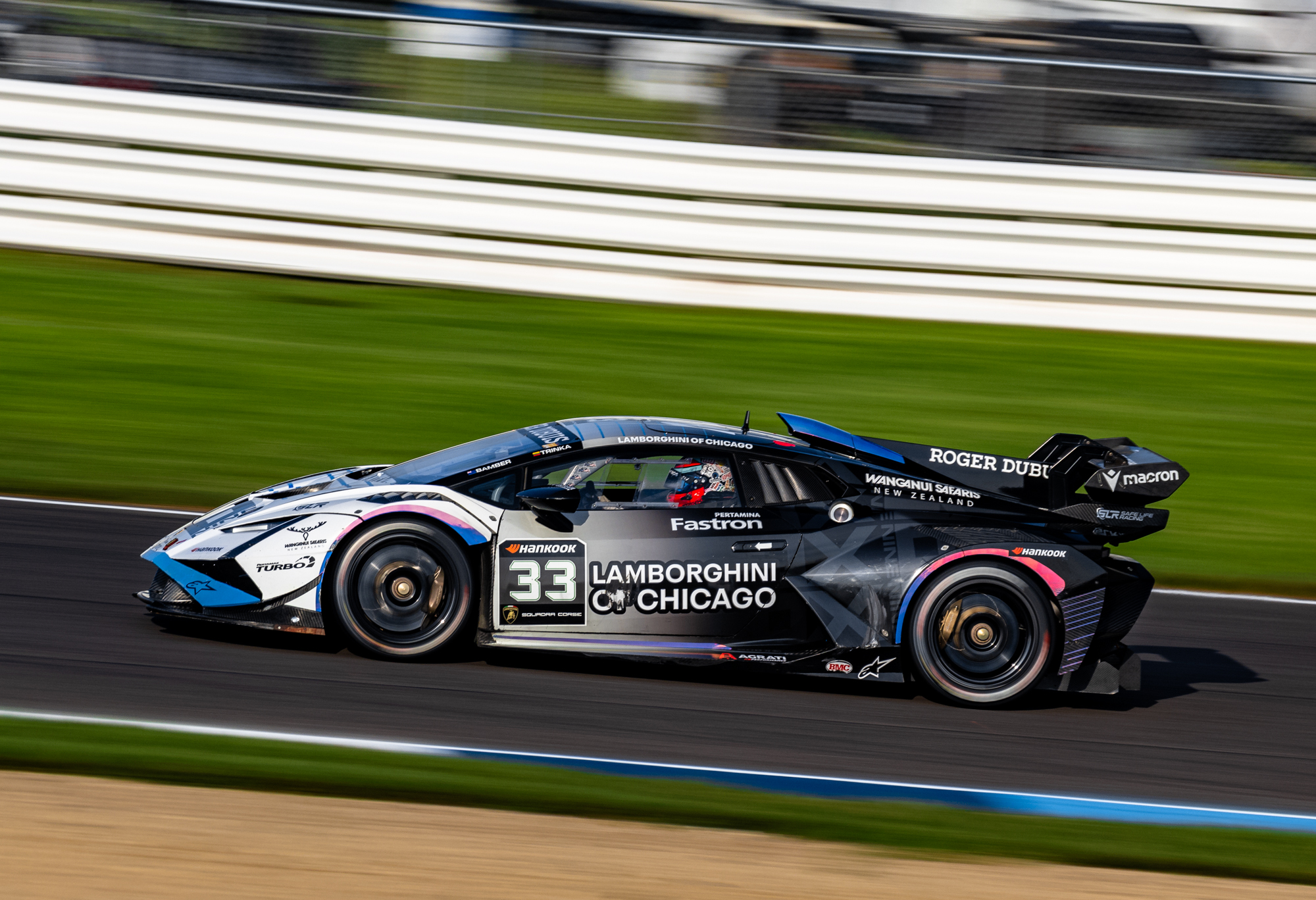
Beginning in 2027, Lamborghini Super Trofeo enters a new era with the Temerario Super Trofeo. That made Indianapolis something of a farewell for the Huracán and, more importantly, its glorious naturally aspirated V10.
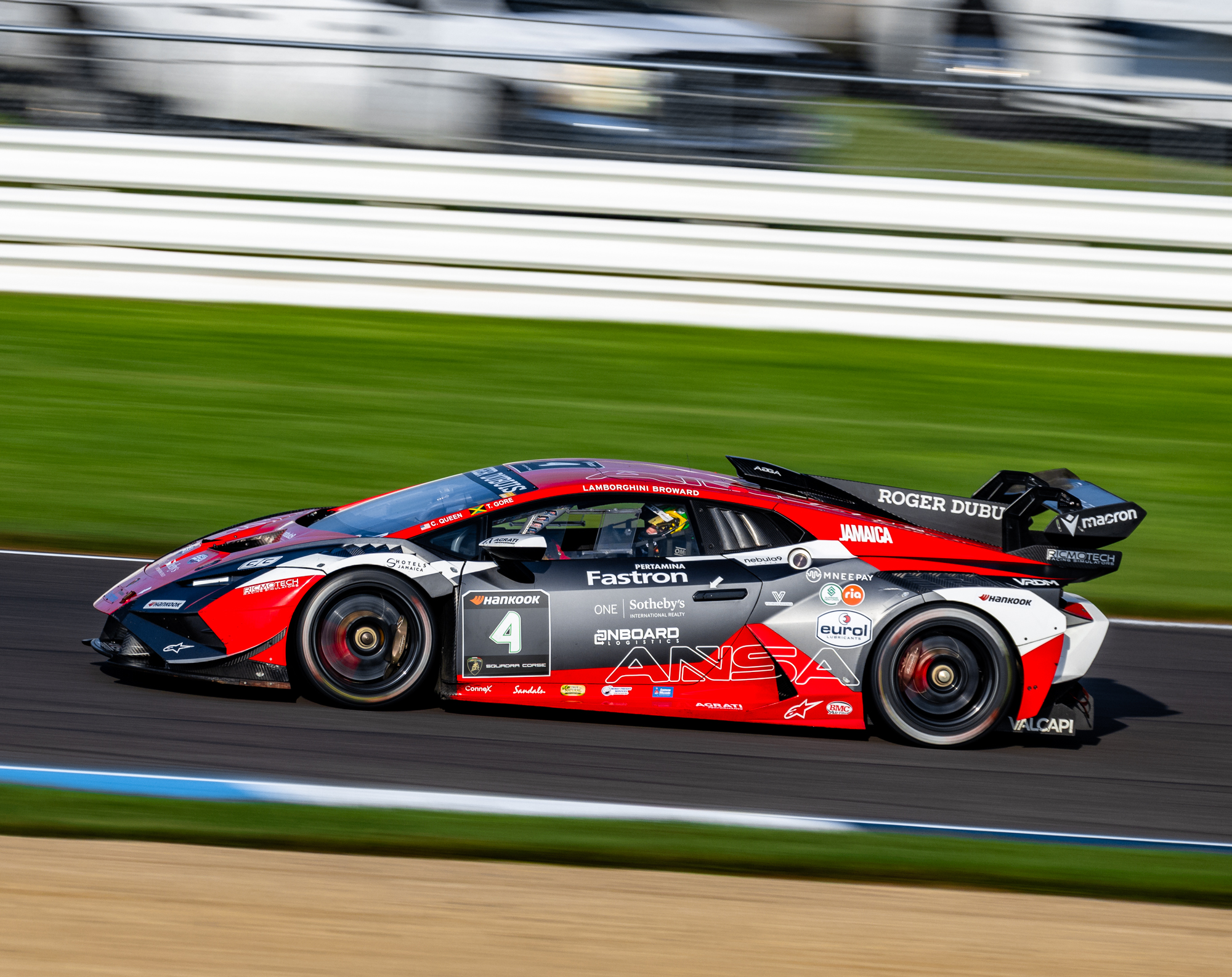
That’s something I appreciate even more in hindsight.
When you’re standing alongside the circuit concentrating on shutter speed, autofocus, composition and keeping a race car traveling well over 100 mph in your viewfinder, you don’t necessarily think about the historical significance of what you’re photographing.
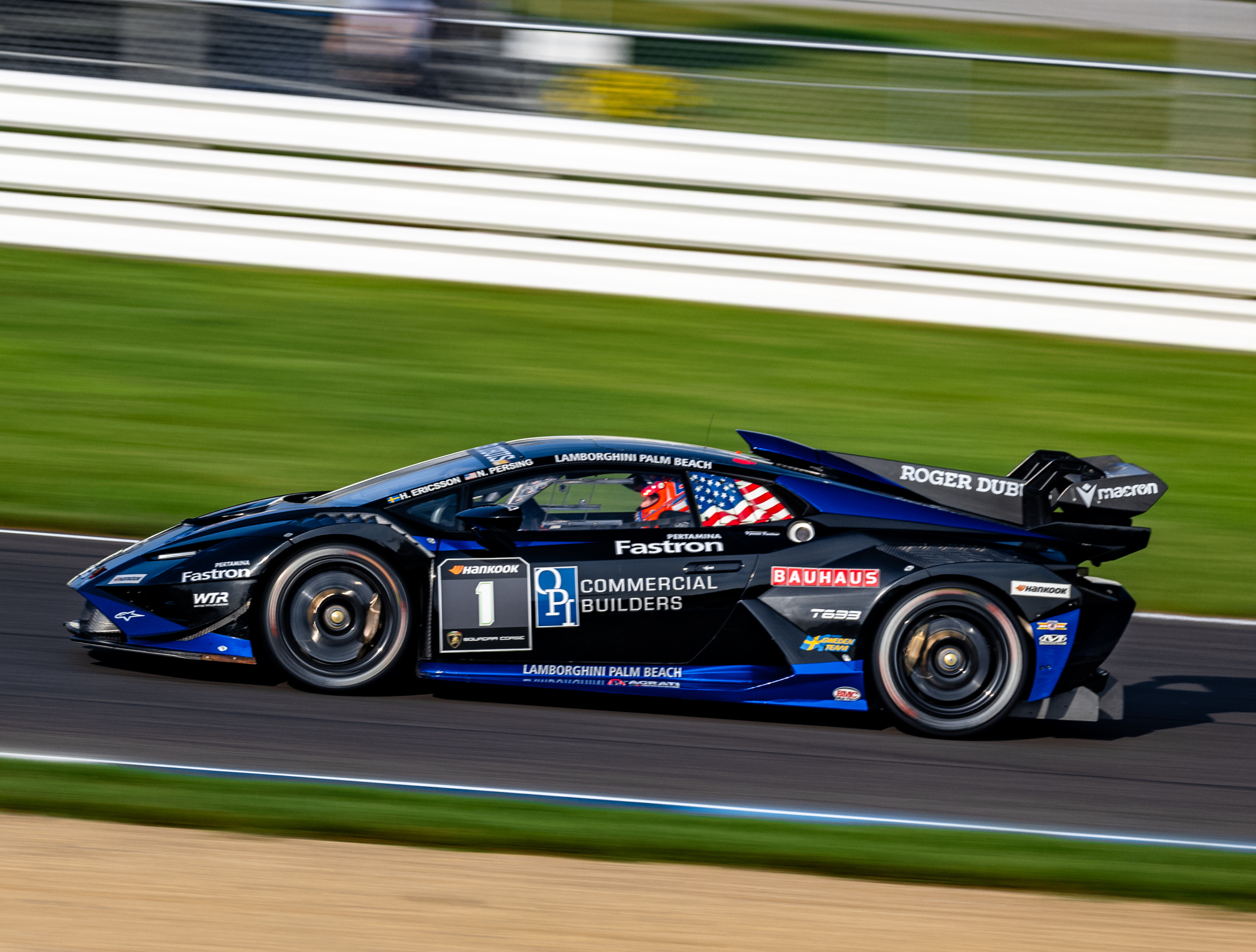
Sometimes that becomes apparent afterward.
These images aren’t simply photographs of Lamborghini race cars at Indianapolis. They’re photographs from one of the final North American race weekends of the Huracán Super Trofeo era.
And I Photographed Winners
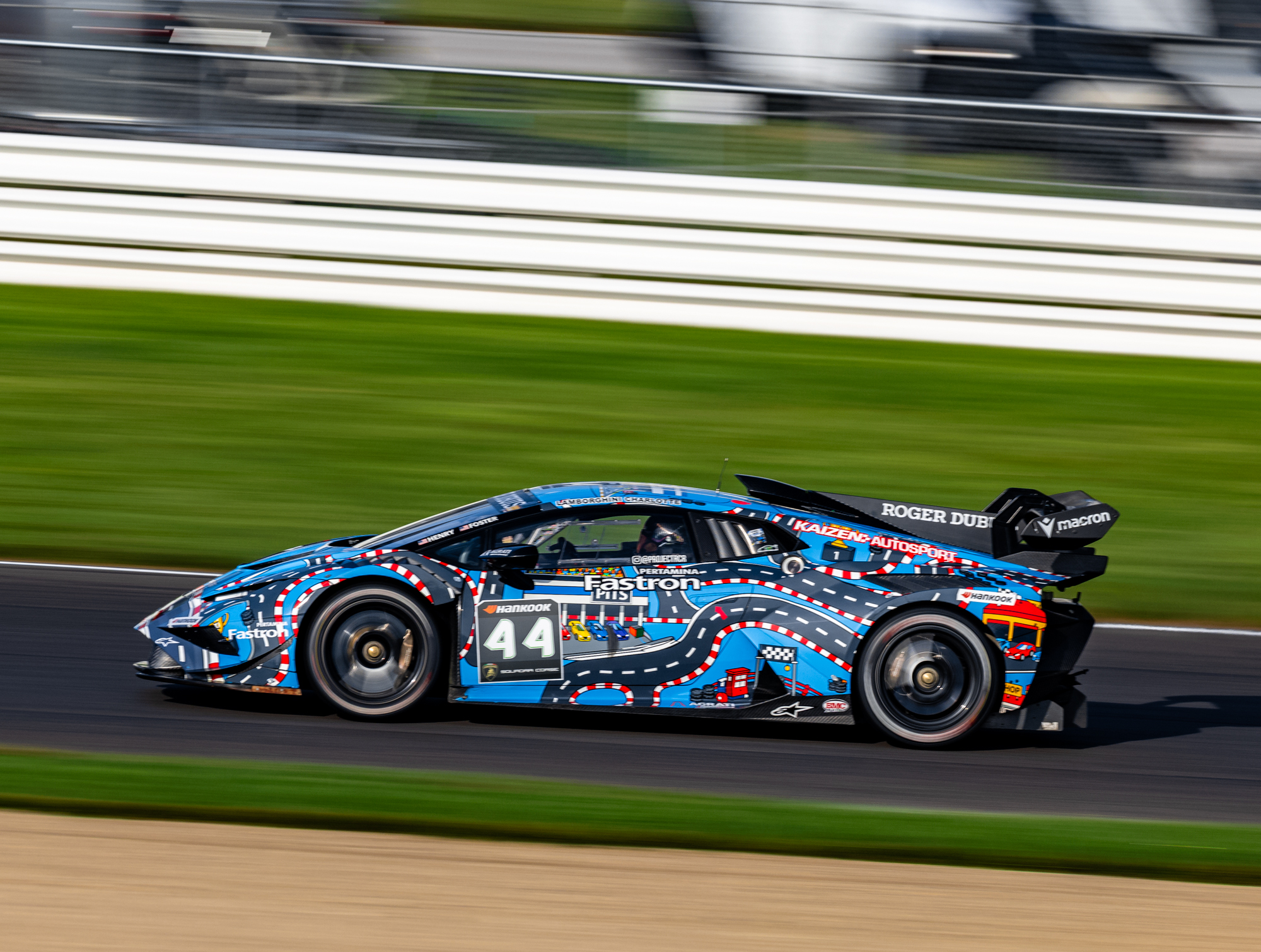
The ProAm winning No. 44 Lamborghini Huracán driven by Wyatt Foster and Seth Henry.
One car that appears prominently in my photographs is the No. 44 Lamborghini Huracán Super Trofeo Evo2 from Kaizen Autosport and Lamborghini Palm Beach, driven by Wyatt Foster and Seth Henry.
It turned out to be a particularly good car to have in front of my camera.
Foster and Henry finished third in ProAm during Saturday’s first race before breaking through on Sunday. The No. 44 won the ProAm class by more than 11 seconds, giving the pair their first Lamborghini Super Trofeo victory. Winning anywhere is special. Winning at Indianapolis Motor Speedway is something else entirely.
For Foster, the moment had an additional connection to the Speedway. He had previously worked as an intern for an Indy 500 team while in college and had dreamed of someday winning at Indianapolis.
Sunday he did.
The overall victory went to Giano Taurino in the No. 88 Taurino Racing Huracán, his first Super Trofeo victory in two years—and appropriately, his previous victory had also come at Indianapolis.
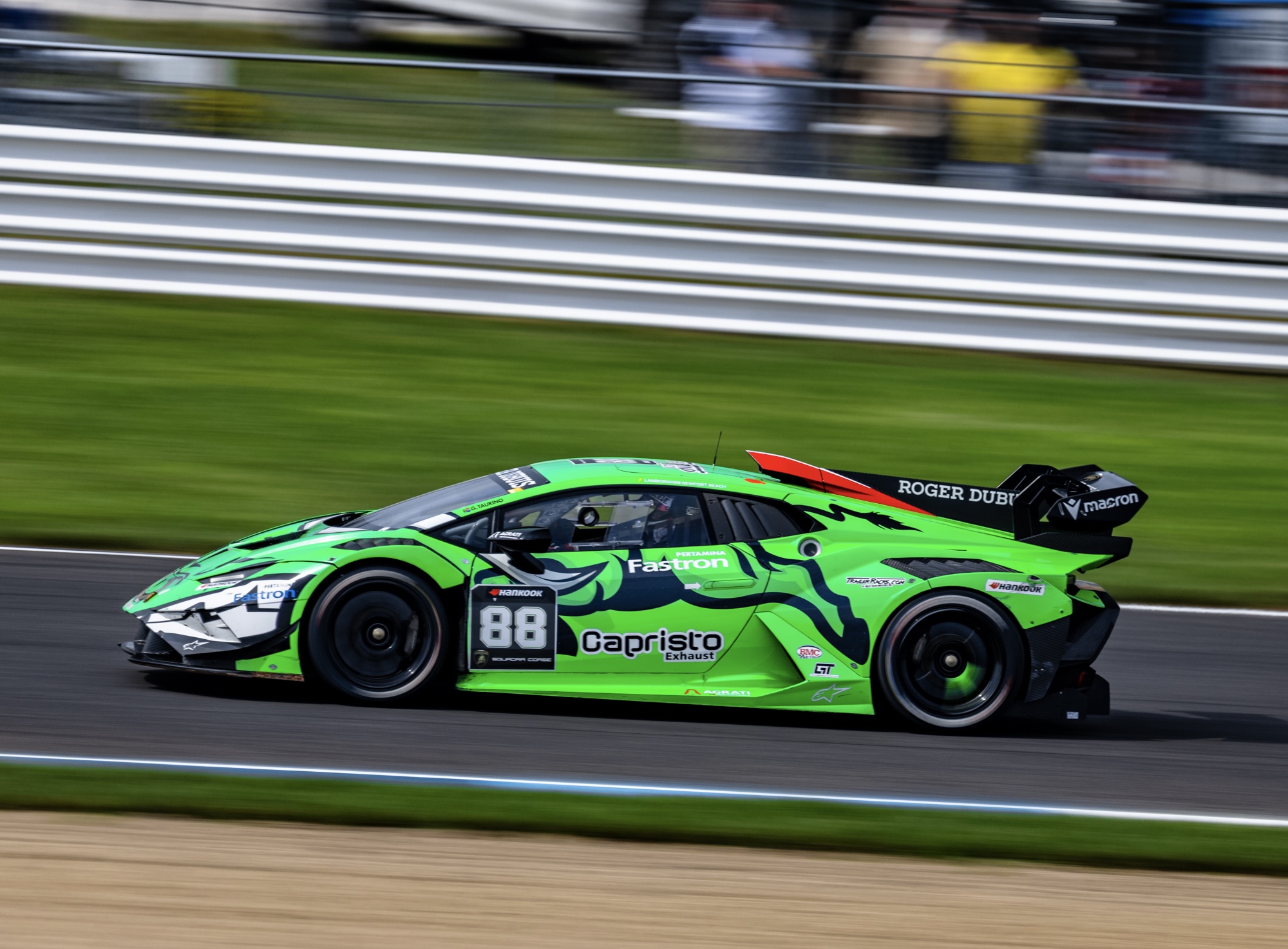
The overall wing No. 88 Taurino Racing Huracán driven by Giano Taurino
The weekend also played an important role in the championship. Danny Formal and Graham Doyle secured the ProAm championship, while David Staab put himself in position to clinch the Am title.
There was plenty happening on track. I was mostly interested in capturing it.
Photographing Super Trofeo
Photographing motorsports is very different from simply using a fast shutter speed to freeze a car. A completely frozen race car can sometimes look surprisingly stationary. The challenge is conveying speed in a still photograph.
For many of these images, that meant panning with the cars and deliberately using slower shutter speeds. As the Lamborghini moves through the frame, I follow it with the camera during the exposure. When everything comes together, the car remains relatively sharp while the background streaks horizontally across the image. That’s the look I’m after.
And the slower you take the shutter speed, the more dramatic the effect becomes—and the lower your keeper rate gets. That’s part of the fun. A technically perfect image isn’t necessarily the goal. I want an image that communicates what it felt like to have that Lamborghini rushing past me.
My Camera: Canon EOS R5 Mark II
My primary camera for the weekend was the Canon R5 Mark II. I’ve used the R5 Mark II extensively for sports, wildlife and motorsports, and this is exactly the kind of situation where the camera shines. Its autofocus system makes tracking a rapidly approaching race car remarkably easy, while the high-resolution sensor gives me considerable flexibility when composing and cropping afterward. That resolution is particularly valuable at a racetrack. Unlike portrait photography, I can’t simply tell my subject to move three feet closer. I’m photographing from wherever I’m permitted to stand, and sometimes the composition I ultimately want requires cropping. The R5 Mark II gives me plenty of room to do that. Its fast burst capability and pre-continuous shooting mode also help when trying to capture exactly the right moment as a car enters a corner, crosses a patch of light or reaches the ideal point in a panning sequence.
An EF Lens on an RF Camera
Interestingly, one of the lenses I relied on at Indianapolis wasn’t one of Canon’s latest RF lenses. It was my Canon EF 100-400mm f/4.5-5.6L IS II USM. I used it on the R5 Mark II with Canon’s EF-EOS R Mount Adapter.
The EF 100-400 II may come from an earlier generation of Canon equipment, but there’s a reason this lens remains so highly regarded. It is extremely sharp, its autofocus performance remains excellent, and the 100-400mm range is nearly ideal for photographing motorsports. At Indianapolis, that flexibility matters.
Sometimes I wanted to isolate a single Lamborghini farther down the circuit at 300 or 400mm. Seconds later, I might need to pull back toward 100mm as the car approached my position or when I wanted more of the Speedway environment in the composition. A prime lens can give you spectacular results, but when you’re working from a fixed shooting location with cars continuously changing their distance from you, a high-quality zoom can be incredibly useful. And Canon’s EF-to-RF adapter makes using older EF glass almost seamless on the R5 Mark II.
The No. 44 Kaizen Autosport Lamborghini and the No. 88 Taurino Racing Huracán weren’t simply colorful Huracáns that happened to pass in front of my lens. They were the last Huracáns to win at Indianapolis Motor Speedway.
The Temerario will undoubtedly bring a new look and a new generation of technology to Lamborghini Super Trofeo. But there is something special about a grid full of naturally aspirated V10 Huracáns screaming around Indianapolis Motor Speedway. I’m glad I was there to photograph them. And I’m especially glad I had the shutter speed turned down.
0 Comments